IL CHIOSTRO – PAINTING AND PHOTO COURSES 6th-13th OCTOBER 2019

IL CHIOSTRO celebrates Art, Photography, Singing, Culture, Food, Wine and Personal Development adventures in Italy since 1995.

It was founded by Linda Mironti and Michael Mele, IL CHIOSTRO organized at our Conference center painting and photograph courses.

For information, please contact: info@ilchiostro.com

ENERGY EFFICIENT MORTGAGE INITIATIVE – 26th and 27th SEPTEMBER 2019 EeMAP – EeDaPP

EeMAP aims to create a mortgage financing mechanism through which property owners are encouraged to improve the energy efficiency of their building or acquire an already energy-efficient property at favorable mortgage conditions. The cornerstone of the initiative is the assumption that energy efficiency has a risk mitigation effect for banks due to the impact on the ability of a borrower to lend his loan and on the value of the property, a correlation that EeMAP initiative is currently working to validate.

EeDaPP aims to support the high energy efficiency mortgage financing mechanism by providing a market-driven protocol that facilitates the large-scale collection and processing of data related to high energy efficiency mortgage activities, through a standardized reporting model. In the long term, it will be possible to access the data through a common centralized portal, which allows the continuous monitoring of the performance of high energy efficiency mortgage activities, thus also facilitating the codification of these activities for the purpose of issuing high efficiency bonds energy.

Further information:

European Mortgage Federation – European Covered Bond Council

Rue de la Science 14A, 2nd Floor – B-1040 Brussels – Belgium

Tel. 0032 2 285 4032

mafsar@hypo.org   www.energyefficientmortgages.eu

THE LIDO AND THE ISLANDS

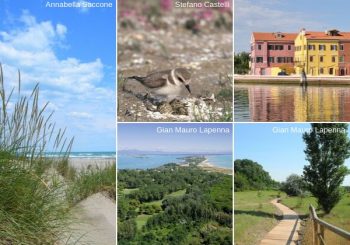
The Lido, an island much loved by poets and writers, with its elegant Liberty villas, the historic village of Malamocco, the 18th century Murazzi and the golden sand beaches, is one of those places where one can still breathe an atmosphere of peace and tranquility. Equally picturesque, the nearby island of Pellestrina is a hidden corner of the lagoon, as fascinating as fragile, which requires that all those who land there opt for a slow, careful and non-invasive experience.


Beaches and natural areas

The beaches of Lido island, this year awarded with the Blue Flag, are appreciated both by Venetians and foreigners. The gentle slope of the seabed permits younger children to bathe in peace; in addition thanks to the total removal of architectural barriers everyone can enjoy the beach. For lovers of natural and wilder settings, there is the Alberoni Sand Dune Oasis, a unique environment used as stopover and winter habitat for numerous birds, such the Fratino and the Fraticello. At the North end of the island, another treasure of biodiversity is the Nature Reserve of San Nicolò area.

The island of Pellestrina boasts forty hectares of protected natural reserve. Ca’ Roman nature reserve, located at the south, is connected to Pellestrina by the artificial Murazzi dam: this reserve still preserves one of the most unspoilt habitat in the whole upper Adriatic area.


The Cycle Route of the islands

The best way to discover these two islands is with an easy and pleasant ride along the Ciclovia delle isole E5. Starting from the Lido you cross the island arriving to Malamocco (on crowded days the internal road route is preferable). Once at Alberoni, take ferry line 11 towards Santa Maria del Mare, at the eastern end of the North of Pellestrina. From here, continuing further south, you cross the villages of San Pietro in Volta and Portosecco.

To protect its extraordinary habitat, the Ca’ Roman reserve is not suitable for cycling. Before arriving at Caroman (Pellestrina Cimitero stop), you can take the vaporetto line 11 towards Chioggia (around 30 minutes). The number of bicycles allowed on board is at the discretion of the captain, for reasons of passenger safety. On Saturdays and holidays, until October 27th 2019, the line 11 service on the Chioggia – Pellestrina section is reinforced with dedicated rides for cyclists. Please note that only passengers and not cycles and motorcycles can be landed or loaded on Ca’ Roman.


Travel tips

To rent a bike, there are several shops on the Lido island that offer daily rates; moreover the public bike sharing service, VeNice in Bike, is available.

MIGLIOR CIBO (BEST FOOD) 9th SEPTEMBER 2019 UNIVERSITY IUAV – VENICE

Best CiBO (FOOD).

Improving Organic Organic Cycles: supply chain synergies for integrated agri-food sustainability “is a research project of the Iuav University of Venice financed with FSE funds from the Veneto Region, which explores the possibilities of organic waste recovery in Venice to transform them into Km0 compost, with a view to environmental circularity and urban metabolism, and which intends to exploit the singularity of action between restaurateurs and farmers above all.

The project considers the relationships of circularity between local food production and regenerative management of organic waste as strategic aspects of agro-food and environmental sustainability, and calls for a more extensive rethinking of the short chain in a two-way perspective, not only focused on chain farm-to-table, but also to return table-to-farm.

In particular, we consider it a priority to recover the organic waste from Venetian catering activities to produce quality compost, locally available and accessible, which can be used by agricultural companies operating in the lagoon (or in the immediate hinterland).

We want to co-design a win-win model for all and that contributes to the construction of virtuous local chains: that transform waste into a resource, which reduces the costs (economic and environmental) of transport and treatment, which offers advantageous opportunities for restaurateurs for sustainable disposal of organic waste, making a valuable resource accessible to professional farmers and urban growers. The event includes seminar parts and parts of workshops / collective debossing, a coffee break, a final aperitif and the opportunity to participate in a guided tour of the fifteenth-century complex that hosts us.

Speakers:

– Matelda Reho, Iuav University of Venice

– Sarah Stempfle, Iuav University of Venice

– Giuliana Da Villa, Veritas

– Federico Adolfo, Veritas

– Paolo Silingardi, Achab Group

Further information:

Sarah Stempfle, PhD

Research Fellow

Università Iuav di Venezia 

Dipartimento di Culture del progetto

Ca’ Tron, Santa Croce 1957, 30135 Venezia (Italy)

E-mail: stempfle@iuav.it

Cell: (+39) 3463033896

www.planningclimatechange.org


VENICE SUMMER SCHOOL: MECHANISM IN DEVELOPMENT AND EVOLUTION 26th-30th AUGUST 2019

About the EMBO-FEBS Lecture Course

Understanding organismal development and its evolution has been one of the biggest challenges for biology since its earliest beginnings. It is the central aim of developmental biology to elucidate the mechanisms underlying pattern formation and morphogenesis. By extension, evolutionary developmental biology (evo-devo) is also considered a “mechanistic science.” But what exactly is meant by “mechanism” in these contexts? What is a developmental mechanism? What is a “mechanism” in developmental evolution? How do these “mechanisms” contribute to evolutionary change? The answer to these fundamental questions is far from clear. And yet, clarity on this foundational conceptual issue is essential for research progress, not only in development and evolution but far beyond, as the nature of the term “mechanism” determines the questions we ask and the explanations that are accepted as valid in disciplines across the life and cognitive sciences.

We have gathered a select group of world-leading empirical investigators and theoreticians from the field of developmental biology and evo-devo together with modelers and philosophers of biology to discuss what “mechanism” means, and what kind of properties the concept should incorporate to guide productive new research and the integration of developmental biology and evolutionary theory. This integration lies at the very heart of modern biology. Its relevance transcends the scope of evo-devo, since an understanding of the mapping from genotype to phenotype through metabolism, physiology, and development is also crucial in other fields, such as the genetic study of complex disease, or organismal behaviour.

This EMBO|FEBS Lecture Course is mainly aimed at early-stage (PhD or postdoc) empirical and theoretical researchers with a general background and interest in developmental and/or evolutionary biology. More senior investigators are welcome to apply as well. Exceptions can be made for motivated masters students. Participants of previous Venice Summer Schools in Evo-Devo are expressly encouraged to reapply as this course has an entirely different topic. The EMBO|FEBS Lecture Course will equip participants with the conceptual tools to engage in a productive discussion of the notion of “mechanism,” and to relate this notion to their own research questions and explanations.

Further information:

Mrs. Berta VERD – Department of Genetics -University of Cambridge
Downing Street, Cambridge, Cambs CB2 3EH – UK

e-mail:bv291@cam.ac.uk

Tel.: +44 7459 226 443